March arrives and the migratory birds that use Flat Rock at Ballina are leaving soon for the northern hemisphere. This is an important time for undisturbed feeding before the long journey. While Flat Rock is favoured by many vulnerable species in this part of the coast, the rocks are often frequented by selfie takers, fossickers, and despite the signs, dogs.
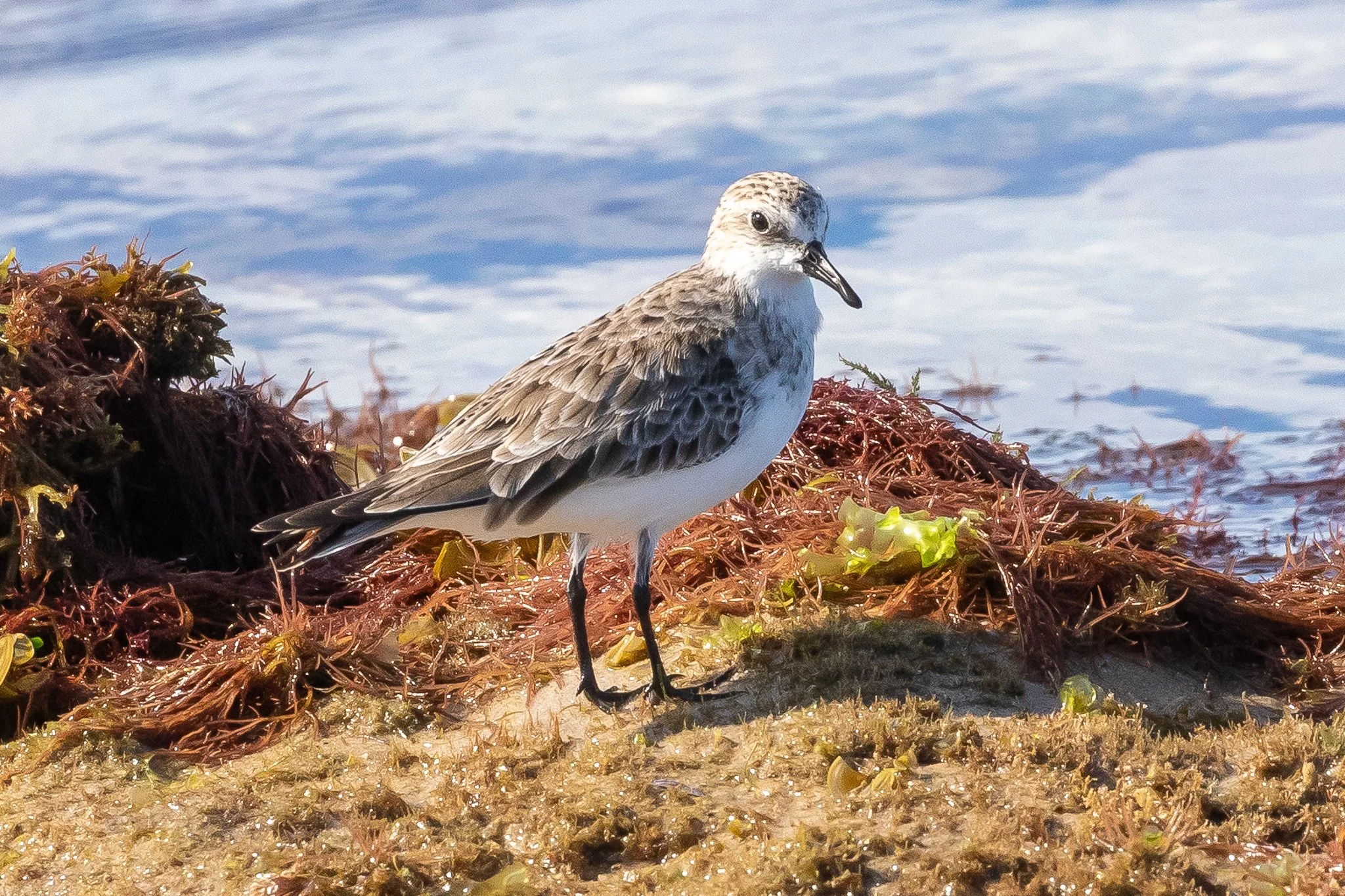
Red-necked Stints travel to Siberia to breed. The characteristic red neck develops through March before their departure in April.
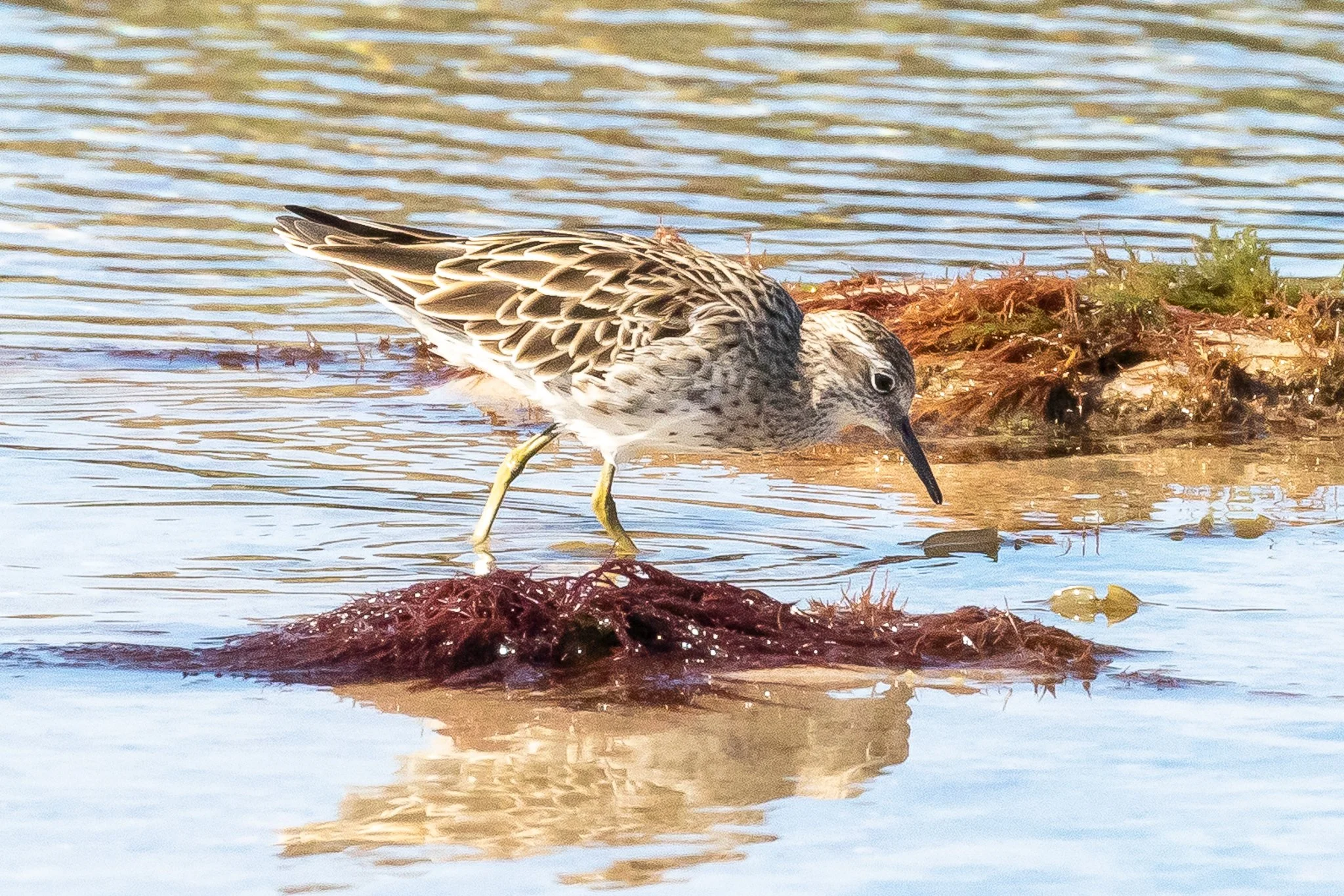
The Sharp-tailed Sandpiper, another species that breeds in Siberia and a regular during the summer at Flat Rock.
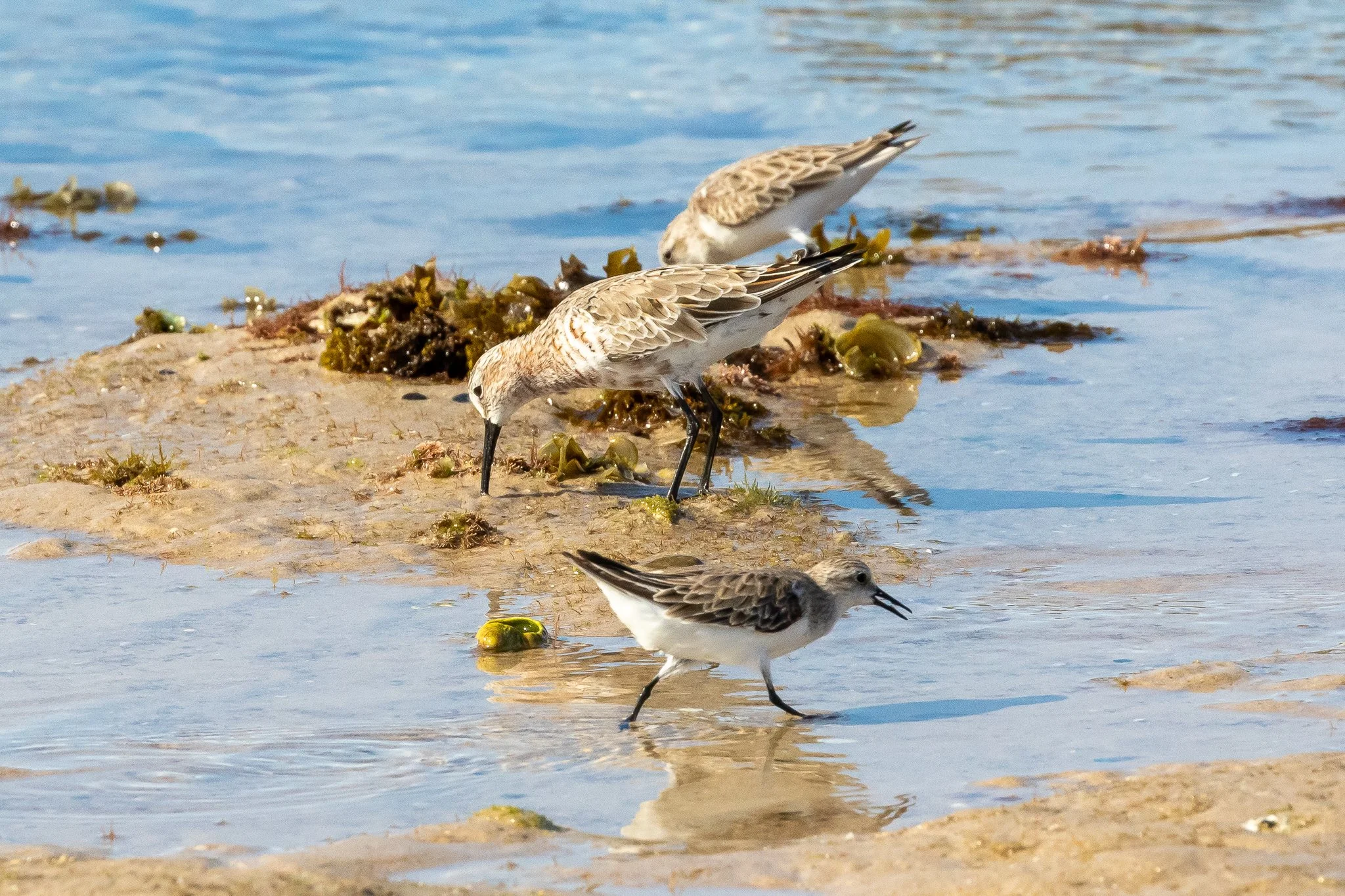
Red-necked Stints feeding while a Curlew Sandpiper probes for worms in a rock-pool. The Curlew is showing a hint of colour as departure looms. Nearby, Ruddy Turnstones were feeding.
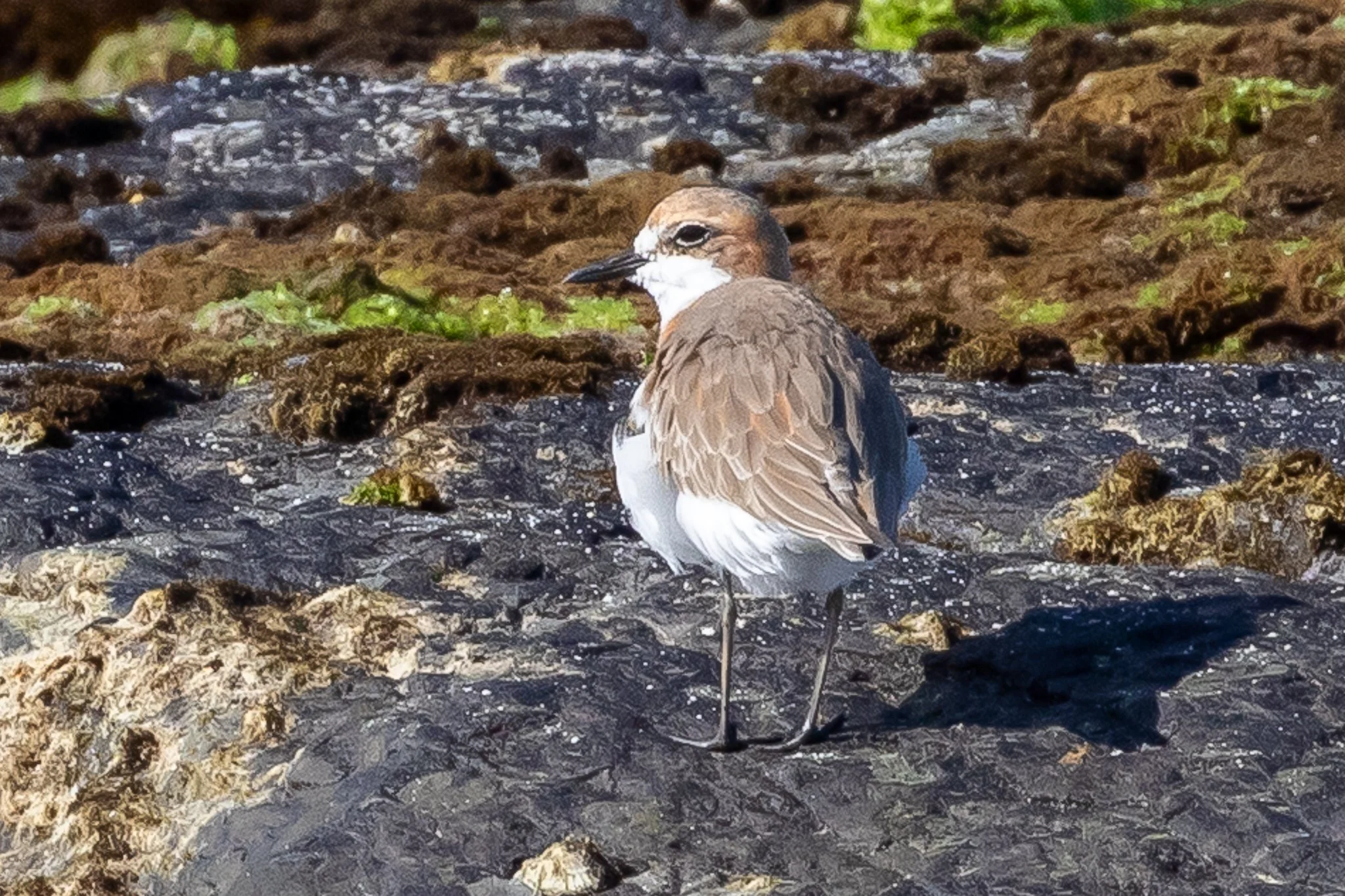
The Greater Sand Plover has a large, somewhat cumbersome bill. Altogether it is a bulky unit. Presumable this single plover at Flat Rock will soon head to the deserts of central Asia to breed.
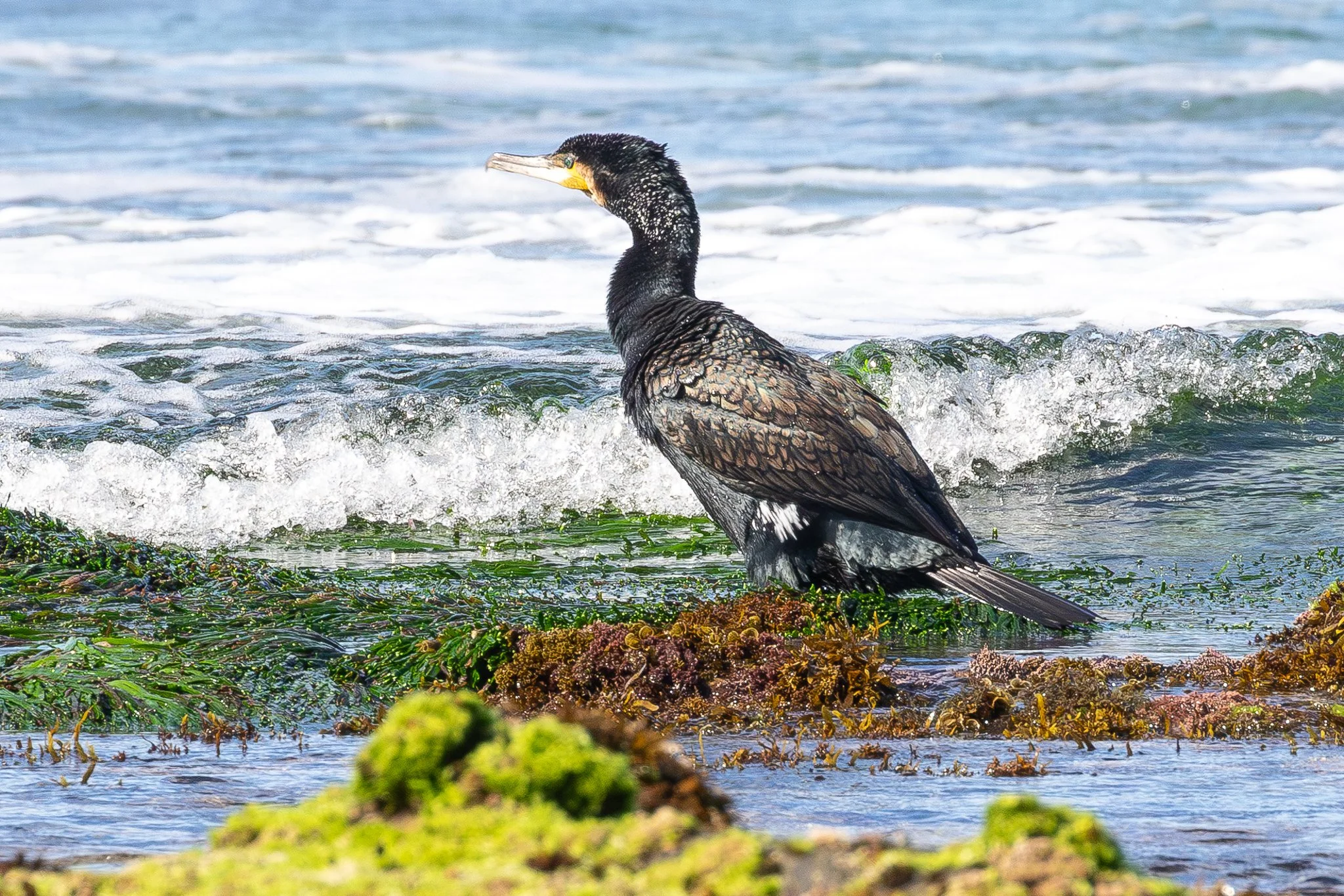
A regular resident this Great Cormorant uses Flat Rock as a base It is often seen fishing in waves that break parallel to he rocks.
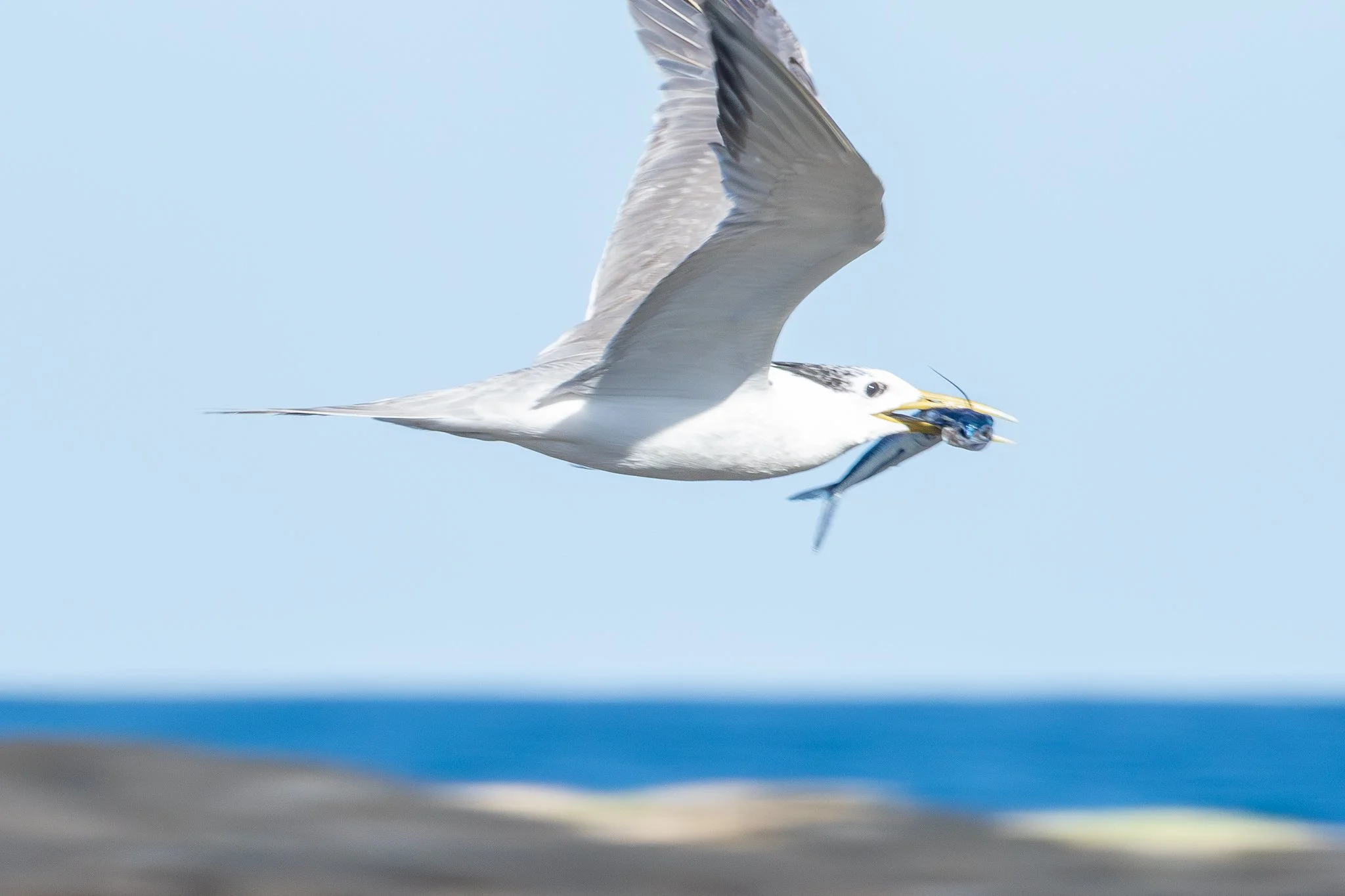
Flat Rock is also a favourite spot for Crested Terns. Other terns seen on the day were Common Terns and the endangered Little Terns.
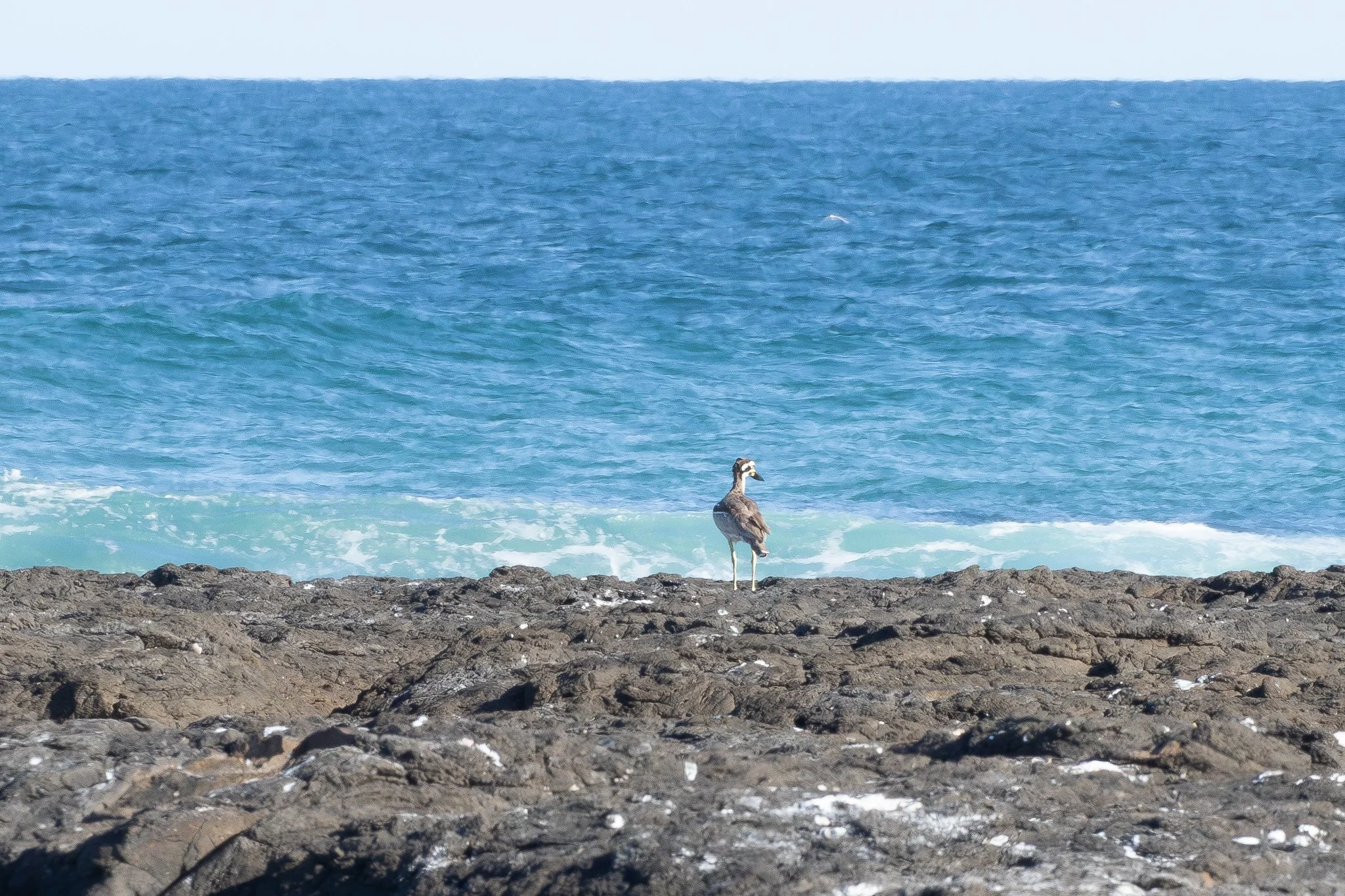
As the sun started to set this Beach-stone Curlew arrived, searching for its favourite food, crabs!